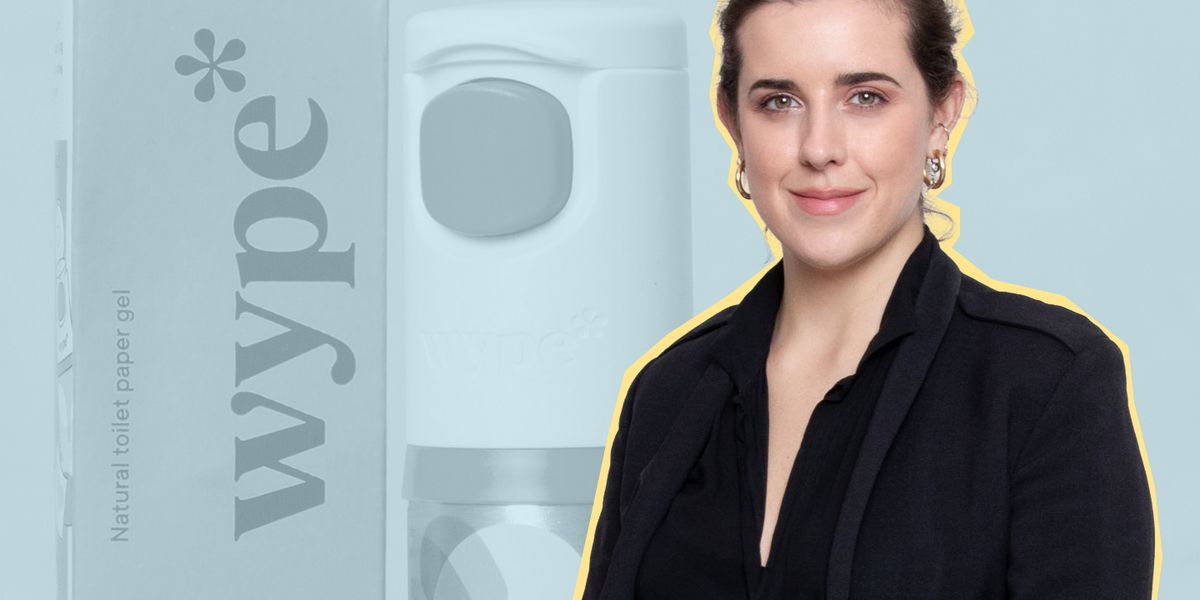
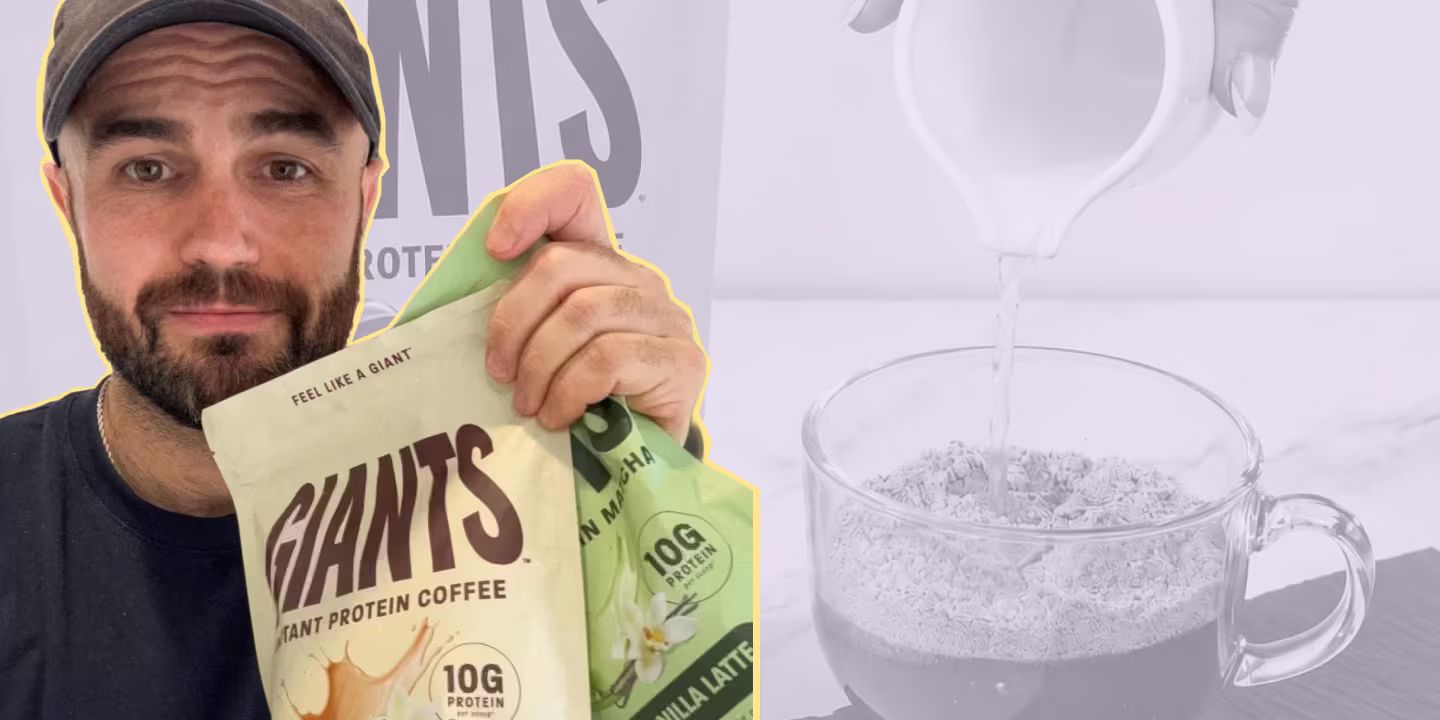
I started Giants, a collagen coffee and matcha brand as a challenge alongside my co-founder Theo. The goal was to get a brand off the ground with £10,000. That’s it. Two years on, it's doing seven figures in annualised revenue and grew more than 1,000% year on year, run mainly direct-to-consumer, on Amazon, and through TikTok Shop. I lead with the budget because it's the whole point. The best thing that happened to this business was that I couldn't afford to get it wrong.
That is not how I thought when I was starting out.
My first company was Ugly, a flavoured sparkling water brand my business partner Joe and I started out of our bedrooms in our early twenties, in 2013.
To date it: there was no Shopify, Instagram was new, there were no investor networking events, and the UK consumer startup scene barely existed, and nobody was posting about angel rounds on LinkedIn.
We bootstrapped it with our own savings and a small amount of family-and-friends money, worked around the clock, and taught ourselves everything. In 2018 we moved the company to America, raised a lot of capital from venture funds, family offices and strategics, and scaled fast. Then COVID hit, we faced headwinds on every front in both the UK and the US, and it didn't end the way we wanted. That was painful at the time. Looking back, I've learned more from things not going my way than from anything that went right.
Here's what I actually do differently now.
I used to think the brand came first
I started my career as a marketeer, in big CPG before joining Vita Coco when it was a brand-new startup in the UK. So I've always believed in brand, design and aesthetic matter. In my twenties, I thought all of that was essential to get right before launching. I've since flipped that on its head.
Product-market fit doesn't need a beautiful brand. It needs three answers: does the product solve a problem, at a price people will actually pay, that leaves you a profit? That's it. Letting go of the perfectionism around typefaces and packaging freed me to focus on the only thing that matters early on.
In my twenties I was stubborn enough to force a square peg into a round hole. Founders do it all the time, partly because the entrepreneurs who become famous for it — James Dyson and his 10,000 iterations — make persistence sound like the whole job. You're 99 rejections from your first yes, so keep going, etc. Youth gives you the energy to keep bending the will of the market to what you want. But bending consumers to you is exhausting. Find product-market fit and everything gets easier. So the question I ask now is: how do I find it as cheaply as possible, before I put real money in?
Money lets you play founder
There's a concept I keep coming back to: beautiful constraints. Having less money forces you to be an essentialist. No cash means real discipline in every decision, because you have to be as efficient with capital as possible, and if you don't have product-market fit, you're inefficient, so the market forces you to find it faster.
Join European founders, operators, and investors who read The Checkout every week.
Raising money doesn't prove any of that. It proves you can charm an investor. That's a different skill. And once you've done it, you can play founder — the office, the team, the brand, the LinkedIn posts, the PR agency placing your articles. None of it says you have a business that works.
Now, funding announcements feel like looking at someone else’s holiday photos on Instagram. You're seeing the highlight, not the P&L. You don't know what's actually happening. So I block out other startups.
Without money, you don't get the choice to play founder, and I now think that's an advantage. Water finds the path of least resistance. Give a business less to work with and it does the same: it finds its way to what actually works, because it has no room to do anything else.
Better decisions, not more hours
Having been through burnout, I can tell you nothing’s worth it. To lead people with clarity and calm, you have to put your physical, mental and emotional health first. In my early twenties I did the opposite — manic obsession, working around the clock, not looking after myself — and it showed up in my decisions.
The job of a founder is to make good decisions, and better decisions don't come from more hours. If what I really do is make, say, five important decisions a day, then compounding better decisions over years is what builds the business — not eighteen-hour days. Spending more time thinking, with a clearer head, is a better use of energy than grinding. The digital and AI tools we have now are leverage toward exactly that: fewer hours, more balance. And when you're healthier and calmer, you don't feel the highs as high or the lows as low. You stay level-headed, which is how you navigate choppy water.
Patience is a strategy
Patience turns out to be a genuine skill, and I've noticed that doing nothing is often the best option. Mistakes happen, and a calm, rational conversation usually fixes what a snap decision would make worse. Things have a habit of working themselves out.
I’ve also come to believe that patience compounds. Bootstrapping means you don't need growth at all costs. Sometimes that means taking your foot off the gas — spending less on ads, not chasing back-to-back months of record growth. In the past I thought every month had to beat the last. It doesn't.
The quieter months are when you fix the tiles on the roof while before the rain sets in — and the month after usually comes in far stronger than we'd forecast. I think of it like Glastonbury taking a year off: you leave the land alone for a season and it comes back better than if you'd worked it flat out. You don't need everything running at full throttle to grow.
(I'm aware all of this sounds like I've been listening to too many podcasts. Guilty. But at least it's written down now.)
What success actually looks like
My definition of success has changed completely, and it isn't a number. It's being healthy, having loving relationships, experiencing life, minimising stress, and having the freedom to build what you want with people you like. If you can laugh at work and spend your days with good people, that's most of it.
I've met enough people with a lot of money who aren't happy to know money isn't the thing. If money made you happy, you'd have to believe almost everyone in history was miserable and only the top 1% ever felt content, and that's plainly not how the world works. Chasing a number ends in disappointment as there's always someone with a bigger one. Comparison is the thief of joy, and all.
Yesterday afternoon I walked down Bermondsey Street, where I live, and passed a man sitting outside a café with a bacon sandwich and a cup of tea, doing the crossword at three o'clock on a Monday. For that moment, I thought he was the richest man in the world.
That's success, isn't it?
AUTHOR
SUPPORTED BY PAPER RUN

Paper Run helps brands win back customers that email can't reach through automated direct mail that integrates with Shopify & Klaviyo.
SUPPORTED BY WAYFLYER

Wayflyer provides purpose-built financing to consumer brands worldwide, deploying over $6 billion to 7,000+ businesses since launching in 2020.
SUPPORTED BY RIVERFLOW

Riverflow is the leading creative AI platform for CPG and Fashion brands, built specifically for high quality, brand accurate visuals in both photoshoots, static ads and videos.
SUPPORTED BY VINE TALENT
Josh at Vine Talent provides consultative executive search for ambitious European consumer brands, helping founders access the calibre of international talent needed to unlock their next stage of growth.
JOIN OUR FOUNDER NETWORK:
VENICE FOUNDERS NETWORK
Where 200+ European consumer founders solve problems together.
An independent space for Europe's Consumer Founders & CEO's.