People assume Wype is asking them to add a new step to their day. We don't see it that way. Wiping is a habit every adult already has, and it's the only part of personal care that never got an upgrade.
Bottom skin is the skin everyone uses and nobody looks after. Bottom care has even been demoted to the household aisle of the supermarket, next to the kitchen roll. We finish the most sensitive skin on the body with dry paper and call it clean.
So we don't sell the change. Our job isn't to invent a habit. It's to connect the experience people have now with the one they want, and give them a feeling they didn't know they were missing.
Start with the aha moment
Behaviour change doesn't start with a product benefit. It starts with someone seeing, in a few seconds, how much better something they do every day could feel. Most people have simply filed "never quite clean" under "life". They have to hear what we're saying and connect it to something they live with and have never thought of as solvable.
Metaphor does a lot of the work. Bird poo on your arm: would you wipe that off with dry paper? That one line has probably done more for us than any product shot, and it makes the point without showing a single bottom.
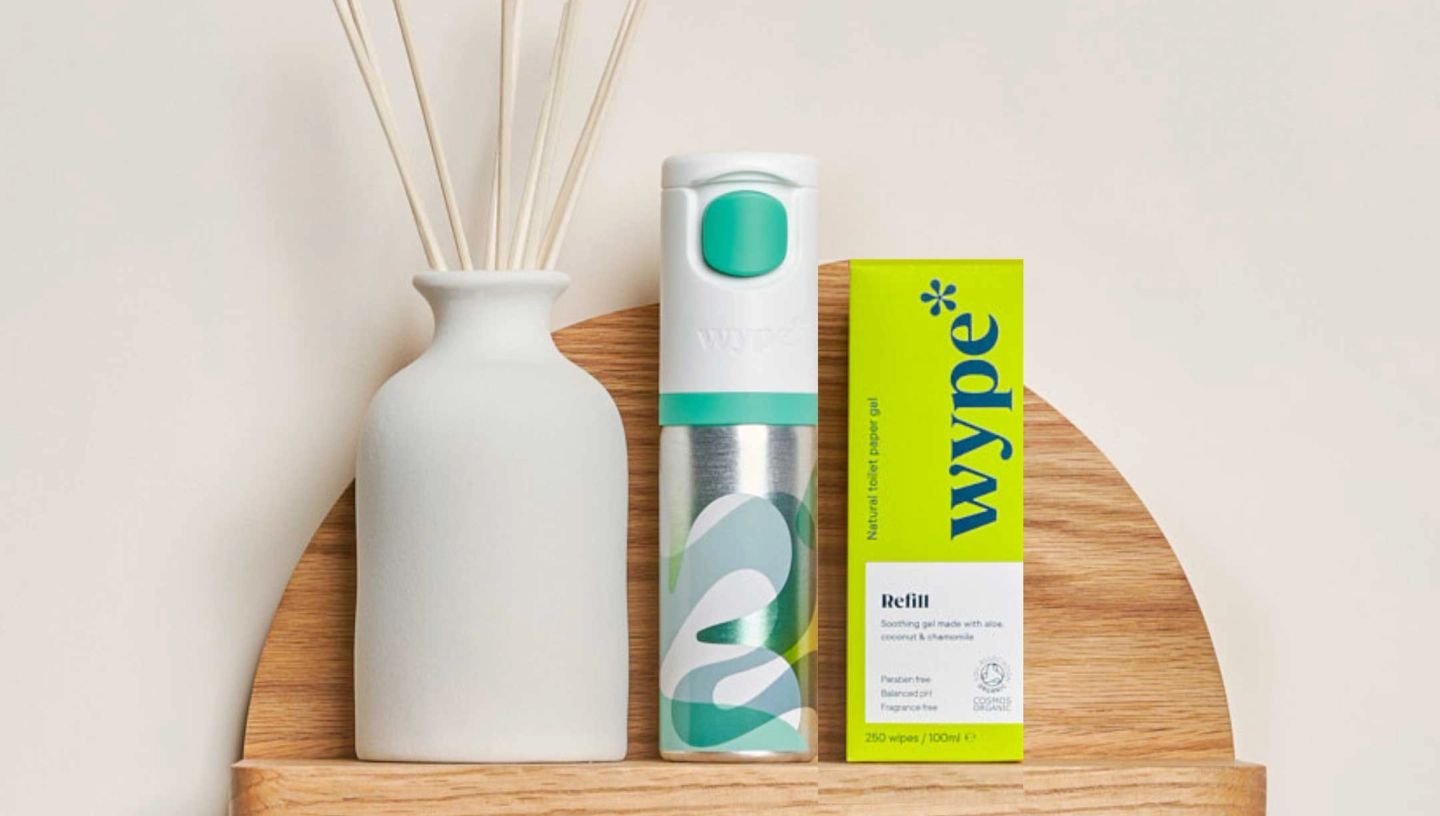
Then we show how it works, again and again. The pump, the paper, the arm. It answers the question people are too polite to ask, will the paper go to mush, and it lets them picture the fix in the same moment they picture the problem.
Our best angles were nearly all written by customers first. We read every review and comment for what they were struggling with before they found us.
Say it like it's normal
People ask whether humour, expertise, discretion or mission converts best. The honest answer is that the tone that works depends on where the viewer is, more than on a house style.
Join European founders, operators, and investors who read The Checkout every week.
Someone who doesn't yet think there's a problem needs curiosity and a bit of a laugh. Someone who already feels "never quite clean" needs us to name it plainly, which lands as empathy more than humour. Someone who's heard of us and is on the fence needs proof: the demo, the reviews, the money-back guarantee, the fact that we're on the shelf in Boots.
Discretion is the one we've mostly dropped from our advertising. We still send orders in unmarked boxes, because that's a real need. But a discreet advert for a bottom care product is a quiet advert, and quiet doesn't get past the thumb. More importantly, whispering tells people this is something to be embarrassed about, which is the opposite of what we believe. Our position is that this is boringly normal, and you can't say that in a whisper.
Expertise is what holds the rest together. We think of ourselves as bottom experts rather than product experts. The skin there is thinner and more reactive than most facial skin, and it gets less care than any other part of the body. Humour gets us noticed. Expertise gets us trusted.
Mission does something different again. It builds the permission to talk about the category at all, which is why we run it as content rather than as ads.
How a private product travels
It usually starts with someone watching a creator use Wype and thinking "why have I never done that?" The first purchase is nearly always for themselves. Then it travels through the household: a partner, the kids, a parent. We see ourselves as a family product.
What's unusual is how private the journey is. People do tell each other about us, but one friend to one friend, quietly, and almost never in the group chat. Wype has also become a surprisingly thoughtful gift, because giving it says "I know you well enough". Men are the exception to all of this. They buy, they come back, and they tell nobody. We'd like to change that last part.
So you accept that the word of mouth you get will be quiet, and that you'll never see most of it in your data. Rather than trying to force it, you create the conditions for it. Two things have worked for us.
The first is the product itself. If we're proud of it, our customers can be too. It's bright, it looks good, and it lives next to the toilet. We want it to get noticed at a friend's house, because a guest spotting it and quietly looking it up later is exactly the kind of word of mouth this category allows. We also take customer care seriously, because a kind, clear reply to an awkward email is the thing people actually repeat.
The second is going where people already talk openly. For bottoms, that's often a clinic rather than a group chat: pelvic floor physios, bowel nurses, patient charities. They recommend us because it helps the people they look after, and that recommendation carries none of the awkwardness a friend-to-friend one would. Several of those relationships came to us unprompted. It's the advocacy I'm proudest of, because it comes from people with no reason to say it unless it's true.
The demo is the product
Our biggest mistake scaling was changing too many things at once, then blaming the wrong one.
Conversion on our site dipped for a few months, and the reflex was "the ads are tired", so we made more ads. It took us longer than it should have to see that we'd also changed who we were talking to and what we were offering at the same time. From the outside, all of those look exactly like creative fatigue.
The fix was unglamorous: change one thing at a time, go back to the people with a real reason to buy, and only then judge the creative.
The broader lesson applies to any habit-change product. Whenever we've drifted away from showing Wype being used, performance has followed us down. When we go back to the pump, the paper and the arm, it comes back. Clever is never a substitute for clear.
Be patient
You're not just winning customers, you're shifting what people are told is normal. People are tribal, and nobody wants to be the odd one out for doing something differently. Our job is to give them permission.
That can take years. But once it shifts, it doesn't shift back.
AUTHOR
SUPPORTED BY PAPER RUN

Paper Run helps brands win back customers that email can't reach through automated direct mail that integrates with Shopify & Klaviyo.
SUPPORTED BY WAYFLYER

Wayflyer provides purpose-built financing to consumer brands worldwide, deploying over $6 billion to 7,000+ businesses since launching in 2020.
SUPPORTED BY RIVERFLOW

Riverflow is the leading creative AI platform for CPG and Fashion brands, built specifically for high quality, brand accurate visuals in both photoshoots, static ads and videos.
SUPPORTED BY VINE TALENT
Josh at Vine Talent provides consultative executive search for ambitious European consumer brands, helping founders access the calibre of international talent needed to unlock their next stage of growth.
JOIN OUR FOUNDER NETWORK:

VENICE FOUNDERS NETWORK
Where 200+ European consumer founders solve problems together.
An independent space for Europe's Consumer Founders & CEO's.