Nobody wakes up wanting L-theanine. They want a better morning. For years, much of the focus in food and drink was on what products didn't contain, like less sugar, less fat, fewer calories. Increasingly, consumers want to understand what a product can do for them.
That shift has pulled a lot of brands towards the same handful of ingredients. I think many of them are building on the wrong foundation. The ingredient should support the benefit, rather than become the entire proposition.
"Ingredients are trends. Brands own outcomes."
One of the biggest challenges in functional food and drink is differentiation. Ingredients such as collagen, creatine and Lion's Mane are now widely used across the category. When multiple brands work with the same ingredients, the ingredient itself stops being a point of difference. I believe the brands that will succeed are those that establish a clear position around the outcome they deliver.
Huel, for example, has built its proposition around complete nutrition, AG1 around a daily health routine and Humantra around hydration. Each has a clear purpose consumers can understand, rather than relying on a single ingredient to define the brand. For Spacegoods, that outcome is focus and energy. Everything we make has to earn its place against that.
The risk of building around one ingredient is that, when consumer interest moves on, there may be little to sustain the brand. CBD is a good example of a category where many brands became closely tied to one ingredient. Brands need to be clear about the benefit they offer and who they're offering it to. We have had to apply that lesson to ourselves.
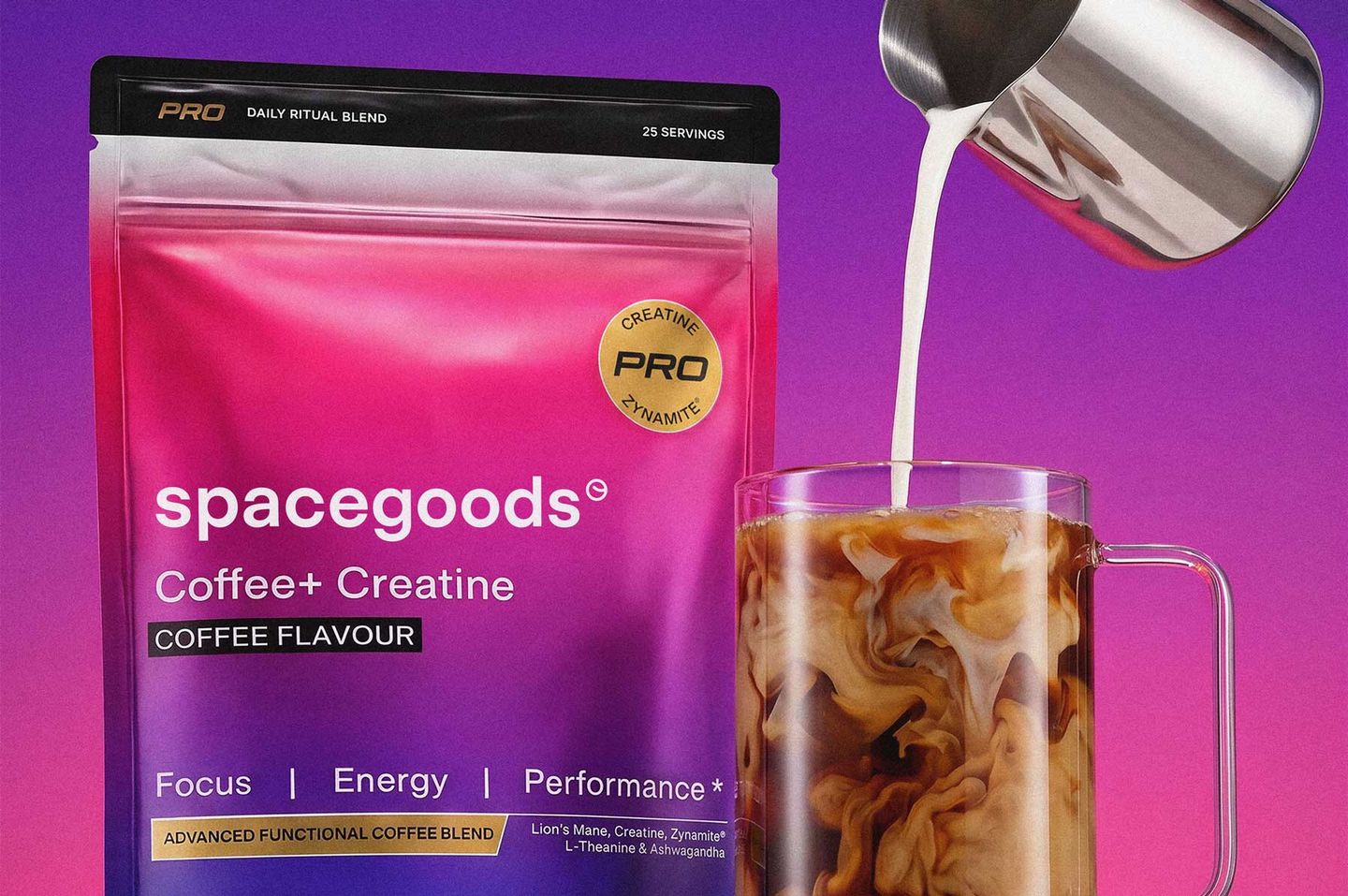
At its core, Spacegoods is a functional coffee brand built around focus and energy. However, for a while, the mushrooms in our blends became what the brand was famous for and how people described us. We've been working hard to bring the brand back to its roots in functional coffee.
That's because we want to be famous not for the ingredients we include, but the outcome and what we help you achieve. Our upgraded range has three functional purposes, aligned with how consumers want to feel and what they want to achieve. For us, the ingredient becomes the signpost, not the proposition. What we sell is a coffee ritual that does more for you.
Building around existing habits
Consumers aren't necessarily looking to overhaul their diets or introduce more products into their routines. They're looking for ways to get more from the things they already do.
Join European founders, operators, and investors who read The Checkout every week.
Coffee is a good example. The UK drinks around 98 million cups a day, according to the British Coffee Association. It's an established daily habit, with consumers already familiar with its role in their mornings and working days. The opportunity is to build on that behaviour by offering additional functionality within a format people already understand.
Our Coffee+ range takes something people already do every day and adds to it. There are three versions on the same coffee base, with Lion's Mane, creatine or collagen. The ritual stays the same; the coffee does more.
Trust has to be built into the product
When we surveyed 35,000 of our own customers in June 2025, 80% said they wanted scientific backing for product claims, and 92% rated taste above price. Both numbers shape how we build products.
As the functional category develops, consumers will expect brands to show the evidence behind what they promise. An ingredient appearing on the front of a pack isn't enough. Brands need to understand the research behind their formulations and use meaningful levels of active ingredients. In some of our recent blends we use branded ingredients, PeptiSleep and Zynamite, at the doses used in their clinical studies. Using less would be cheaper, but it would put the name on the pack without the substance behind it.
One of the biggest risks to the category is including a small amount of an ingredient simply to feature it on pack, without using enough to deliver a meaningful benefit. This risks damaging consumer confidence in the wider category.
The product also needs to taste good. Consumers may initially be interested in a functional benefit, but taste and product experience will determine whether they buy again. You don't build a daily habit on something people merely tolerate.
Formulation also needs to take account of the format. An ingredient that works in a powder may not translate directly into a can or gummy, particularly when it comes to taste, stability and dosage. When we took our powder into a ready-to-drink format, we had to rethink how the taste held up mixed with oat milk, and whether every ingredient would stay stable for the full shelf life.
Retail needs to reflect how people shop
There is an opportunity for retailers to think differently about how functional products are presented. Food and drink has traditionally been organised by product type, but consumers often approach shopping with a need in mind.
Someone looking for more energy, better focus or support with sleep may not know which ingredient to look for, or even which category to visit. Organising products more clearly around needs and occasions could make the category easier to navigate and help consumers understand where different products fit into their day.
Holland & Barrett is a good example. It places functional drinks within its tea and coffee category, rather than in the vitamins, minerals and supplements aisle. A shopper looking for tea or coffee sees functional options right alongside, as a way to upgrade something they already buy. In many other retailers, functional products sit away from the core category, so fewer shoppers ever discover them or the ways they could improve their daily routine.
Build for the long term
At Spacegoods, our own growth has reinforced the importance of having a clear proposition and developing products around how people actually live. The brand is now stocked in more than 1,000 stores and was ranked fifth in the Alantra 2025 Food & Beverage Fast 50, following compound annual sales growth of 177% across the two financial years assessed.
Functional coffee is where we see the most room to grow, and it is where our next launches, planned for the first half of 2027, will focus.
The wider point goes beyond any one product or ingredient. Functional food and drink will continue to evolve, and new ingredients will come in and out of fashion. The brands that build lasting relationships with consumers will be those that understand the outcome they're delivering, support it with credible formulation and make products people want to use regularly.
People already have routines. The opportunity is to make the products within them work harder.
AUTHOR
SUPPORTED BY PAPER RUN

Paper Run helps brands win back customers that email can't reach through automated direct mail that integrates with Shopify & Klaviyo.
SUPPORTED BY WAYFLYER

Wayflyer provides purpose-built financing to consumer brands worldwide, deploying over $6 billion to 7,000+ businesses since launching in 2020.
SUPPORTED BY RIVERFLOW

Riverflow is the leading creative AI platform for CPG and Fashion brands, built specifically for high quality, brand accurate visuals in both photoshoots, static ads and videos.
SUPPORTED BY VINE TALENT
Josh at Vine Talent provides consultative executive search for ambitious European consumer brands, helping founders access the calibre of international talent needed to unlock their next stage of growth.
JOIN OUR FOUNDER NETWORK:

VENICE FOUNDERS NETWORK
Where 200+ European consumer founders solve problems together.
An independent space for Europe's Consumer Founders & CEO's.