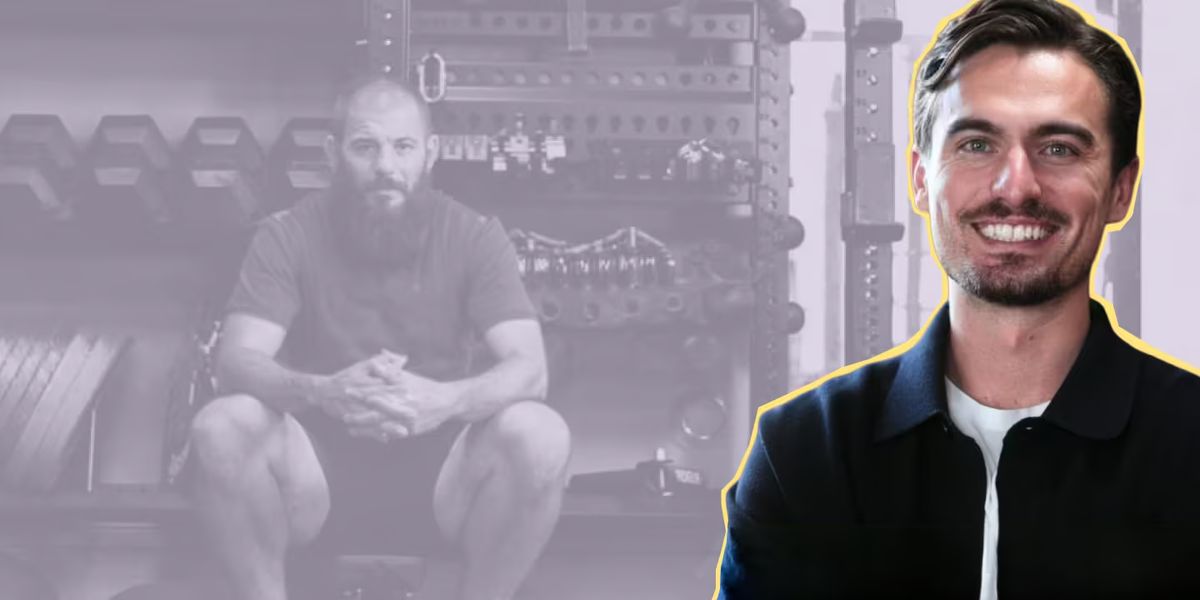


Guido Aldera, co-founder of Vivaio Ventures, has spent two years building creator-led consumer brands in Italy. His thesis is straightforward: most creator brands don't fail because the creator lacks talent or audience. They fail because nobody closes the gap between having a following and running a business.
With twelve brands under management and expansion into Northern Europe planned, Guido spoke to The Checkout about where creator brands break down, why product credibility beats celebrity identity, and what it takes to operate a portfolio of creator brands from a single team.
Where creator brands lose momentum
Creators start with something most brands spend years earning: trust. Guido said that in the early days of a launch, that trust transfers directly to the brand. The audience is excited, willing to try, ready to buy. But that structural advantage has a shelf life.
"If the product doesn't live up to it, if it's just a generic formula with a label slapped on it, with no real innovation in ingredients, packaging, or positioning, that enthusiasm deflates fast," Guido said. "Churn becomes inevitable."
The second failure point is coordination. Launching and scaling a brand involves manufacturers, logistics partners, agencies, and team members who have never worked together.
"When nobody owns the whole picture, things eventually fall apart," he said.
Why Vivaio bets on product credibility over celebrity identity
Guido draws a sharp line between two types of creator brands. Cultural relevance brands (SKIMS, Casamigos) that scale on identity, and niche ownership brands that scale on product credibility (epetōme, KM Tools, Eveir). Vivaio builds in the second category.
"Scaling on identity requires a very specific equation: global talent, a world-class marketing budget, and deep distribution reach," Guido said. "That's achievable, but only for a small handful of celebrities. And even then, you need the right distribution partners at the table from day one."
Starting from the product opens the model to a much wider group of creators. Mid-level creators with real credibility in a specific niche can build brands that disrupt a category by having a clearer value proposition and a more loyal customer base.
Join European founders, operators, and investors who read The Checkout every week.
"It may take longer to scale, but the fundamentals are healthier and the business is more defensible," he said.
Italy has all the ingredients, but not the scale
Italy has the manufacturing base, the design culture, and the creators. What it lacks is scale. Guido pointed to Europe's fragmentation and language barriers as the primary constraints keeping European creators contained within their domestic markets.
"An Italian creator can build a strong domestic audience, but when it comes to expanding geographically, they lose their home advantage and they're competing on even ground with every other brand out there," he said.
Guido thinks that's changing. AI dubbing across social platforms is making it increasingly viable for the best creators to grow audiences beyond their home country.
"That's a real tailwind," he said. "And their brands will follow."
One operating stack, 30% cost savings
Vivaio defines itself as an operator, not an investor. In practice, that means the company owns the full operational stack: product development, ecommerce, logistics, customer service, finance, and admin. This way Creators and their management team can focus on the creative side of the business.
"Working across 10+ projects with a lean, hands-on team means we spot what works fast and roll out best practices across the portfolio in real time," Guido said.
The centralised model also pools resources across all Vivaio brands, creating network synergies that translate to cost savings of over 30% on personnel and services. Those savings go straight into growth.
"By owning all the moving parts, we eliminate miscommunication entirely," he said. "And because we keep the structure lean, brands stay agile long enough to find their footing before taking on the weight of a full in-house team."
AI is accelerating the economics
Guido said Vivaio is building at a moment where meaningful new tools drop almost every month, and the team is actively taking advantage of it.
"The 30%+ cost savings we deliver to creators are partly a function of AI," he said. "We've automated all reporting, admin, and customer support workflows, which frees the team to focus on the work that actually moves the needle."
More automation is on the roadmap, and Guido sees the current environment as one where the operational model can scale to more brands per team than would have been possible two years ago.
Vivaio Ventures is launching three new creator brands this year and preparing to expand beyond Italy into Northern Europe. More on the firm's portfolio and model is available at vivaioventures.com.
AUTHOR
CONTRIBUTOR
SUPPORTED BY PAPER RUN

Paper Run helps brands win back customers that email can't reach through automated direct mail that integrates with Shopify & Klaviyo.
SUPPORTED BY WAYFLYER

Wayflyer provides purpose-built financing to consumer brands worldwide, deploying over $6 billion to 7,000+ businesses since launching in 2020.
SUPPORTED BY RIVERFLOW

Riverflow is the leading creative AI platform for CPG and Fashion brands, built specifically for high quality, brand accurate visuals in both photoshoots, static ads and videos.
SUPPORTED BY VINE TALENT

Josh at Vine Talent provides consultative executive search for ambitious European consumer brands, helping founders access the calibre of international talent needed to unlock their next stage of growth.
JOIN OUR FOUNDER NETWORK:
VENICE FOUNDERS NETWORK
Where 200+ European consumer founders solve problems together.
An independent space for Europe's Consumer Founders & CEO's.